Hammertoe Treatments in Nevada
Relief for painful, contracted toes with conservative care and surgical options tailored to your foot health.

What You Need To Know
Understanding hammertoe: what it is, why it happens, and how we treat it.
Understanding Hammertoe and Its Causes
Hammertoe is where one or more toes bend downward, pulled by contracting tendons and ligaments. Hammertoes develop when ligaments and tendons contract, causing the middle joints of your toes to push upward. At the same time, the tips curl downward and make a claw or hammer shape. This problem can affect any of the toes except the big toe.
There are two types of hammertoe. A flexible hammertoe is less severe and easier to treat, and the joint is still moveable. A rigid hammertoe is more serious and may require surgical treatment. This type can develop in people with severe arthritis or those who wait too long to seek treatment for a flexible hammertoe.
The hammer-like appearance of the affected toes is a clear symptom. As hammertoe worsens, the toes may rise and start overlapping your other toes. Other symptoms include pain when wearing shoes, inflammation, redness or swelling at the joint, restricted or painful motion, and pain at the ball of the foot below the affected toe.
A muscle imbalance in your foot causes hammertoes, and it may result from injury, nerve damage, bunions, stroke, arthritis, or a genetic predisposition. Wearing high-heeled shoes or ones with a narrow toe box can also encourage hammertoe formation.
Hammertoes are progressive and usually get worse over time. If you develop this problem, seek help before the affected hammertoe locks in place. Call your nearest Nevada Foot and Ankle office to schedule an evaluation with a podiatrist.
Treatment Options for Hammertoe
Initial hammertoe treatment aims to reduce symptoms and improve mobility. If your hammertoe is still flexible, your Nevada Foot and Ankle podiatrist may recommend nonsurgical treatments such as wearing shoes with a roomier toe box, custom orthotics, padding for corns and calluses, splinting or strapping the toe, and nonsteroidal anti-inflammatory medications.
Avoid shoes with pointed toes, shoes that are too small, or high heels, all of which can force your toe against the tip of the shoe. Instead, choose comfortable shoes with a deep, roomy toe box and heels no higher than two inches. A custom orthotic device placed in your shoe may help control the muscle and tendon imbalance driving the deformity.
Corticosteroid injections are sometimes used to ease pain and inflammation caused by a hammertoe. Oral NSAIDs such as ibuprofen may also be recommended, and splints or small straps may be applied to help realign the bent toe while it is still flexible.
If conservative measures aren’t successful or your hammertoes become rigid and painful, surgery may be necessary. Tendon transfer reroutes the tendon from underneath the hammertoe to the top of the toe so it pulls the toe down. Arthroplasty removes some of the bone from the first joint, reducing prominence while allowing the toe to move. Arthrodesis removes the entire joint and fuses the remaining bones, sometimes using a pin to hold the toe while it heals.
Your doctor will consider the extent of your deformity, the number of toes involved, your age, health status, and activity level when planning treatment and recovery.
Hammertoe Care at a Nevada Office Near You
Nevada Foot and Ankle treats hammertoes at our offices across Nevada.


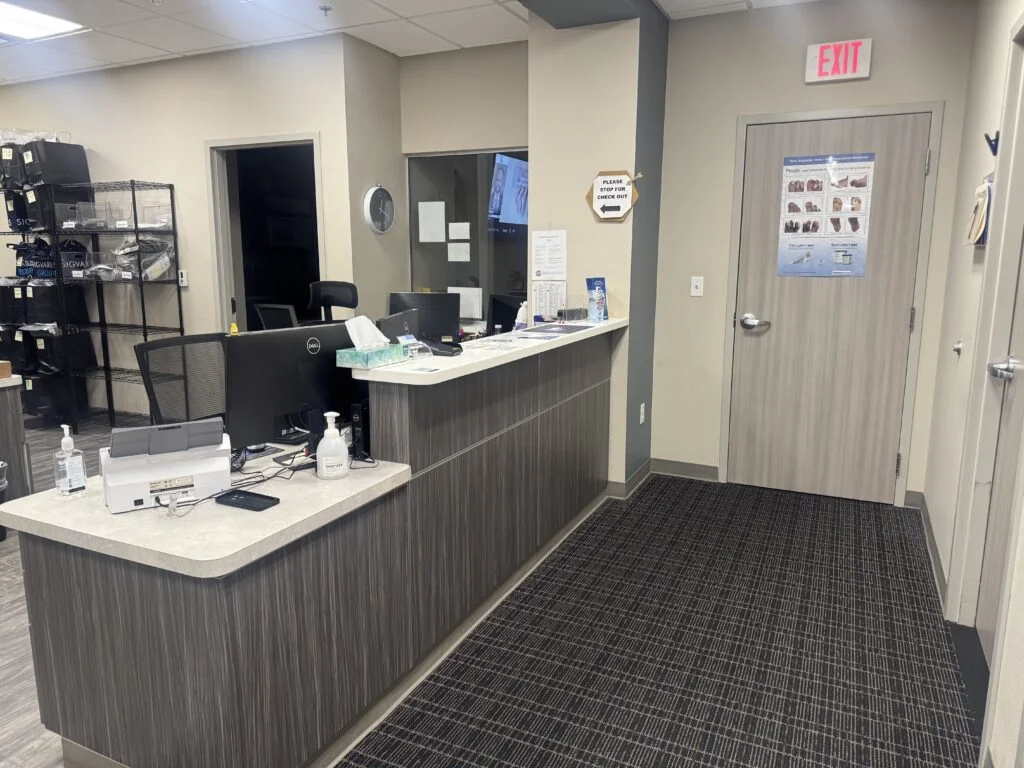
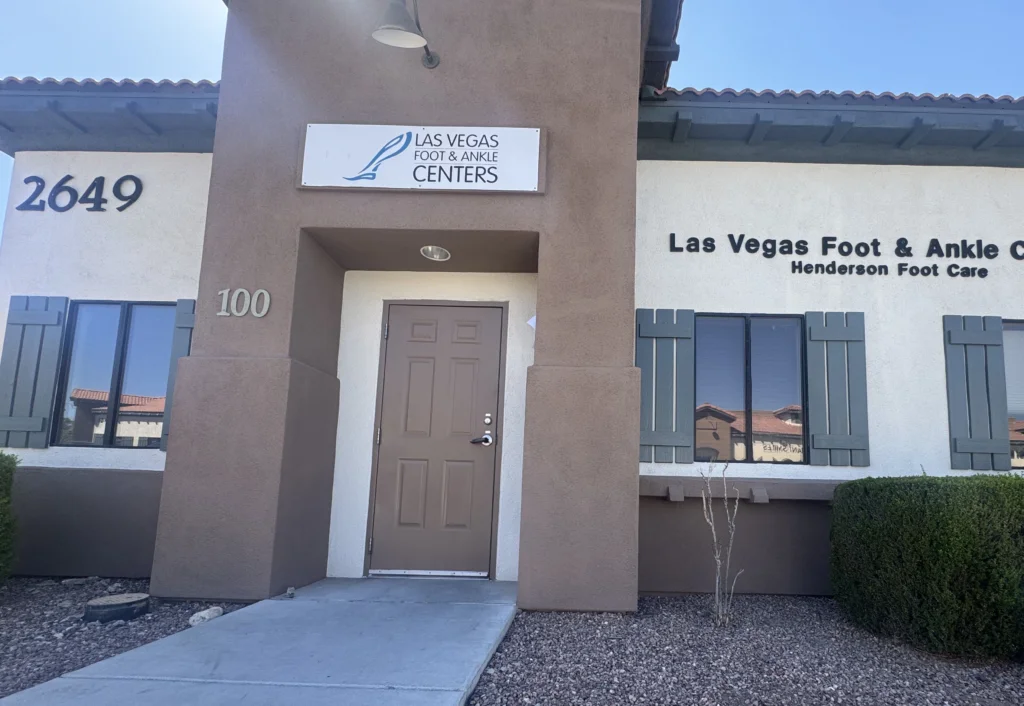
Nevada Foot and Ankle, Henderson – Horizon Ridge
2649 W Horizon Ridge Parkway, Suite 100
View Clinic
Don’t wait until your hammertoe locks in place, let’s get you moving comfortably again.
Book with Nevada Foot and Ankle today and we’ll help you find relief.