
Foot and Ankle Fracture Treatment
Expert diagnosis and treatment for broken bones in the foot and ankle, from stress fractures to complex breaks.

What You Need To Know About Fractures
Learn how foot and ankle fractures happen, what to watch for, and how we treat them.
Understanding Foot and Ankle Fractures
A break in one or more of the bones of the foot is called a fracture. It could happen due to a trauma, like a fall, accident or an injury. There are two main kinds: a compound or open fracture, where the bone breaks through the skin or in more than one place, and a simple or closed fracture, where the bone does not come through the skin and there is a single break.
There are 26 bones in each foot and ankle, all of which undergo significant strain and pressure as you move throughout the day. When bones receive more force than they can endure, they can break. The usual areas that suffer broken bones are the toes, the top of the foot, the underside of the foot and the ankle. Stress fractures occur when pressure is placed on the weak points of the feet, and they are common in people with osteoporosis, in the elderly, and in athletes who train for sports involving a lot of running.
Fractures and sprains share similar signs, including severe pain that starts immediately after the injury, swelling, redness, or bruising, reduced range of motion, and difficulty walking. Other signs include a snapping sound when the injury happens, tenderness, inability to put weight on the foot, or a visible deformity where the bone looks out of joint.
Broken bones can result from trauma, falls, sports injuries, sudden twists, arthritis, osteoporosis, overuse, or added pressure from being overweight. Don’t attempt to self-diagnose your injury. If you suspect a broken bone, get medical help right away so we can evaluate the injury, order X-rays, and start the right treatment plan.
Treatment, First Aid, and Recovery
Until you are able to see a foot and ankle surgeon, the RICE method of care should be performed. Rest the injured foot, since walking may cause further injury. Apply an ice pack to the area with a thin towel between the ice and the skin, using ice for 20 minutes and then waiting at least 40 minutes before icing again. Use an elastic wrap to control swelling, and raise the foot slightly above the level of your heart.
Before medical help arrives, stop any bleeding, control swelling with ice packs, elevate the foot, and get medical help immediately. If the bone is pushing through the skin, do not touch it, do not try to put a bandage or footwear on the injured area, and try not to put weight on the foot. If your fracture involves an open wound, go to an emergency room immediately, as open fractures have a high risk of infection.
We create an individualized treatment plan based on the severity of your injury. Less severe fractures typically require immobilization with a cast, cast boot, or stiff-soled shoe for about 6 to 8 weeks, and crutches may be needed to keep weight off the foot. Bone stimulation, most commonly used for Jones fractures, may be added to speed healing. More complex or unstable fractures may need surgery, where our foot and ankle surgeons reposition the bones and may use plates, screws, or rods to hold them in place.
After the bone heals, we recommend a physical therapy program to restore strength and mobility. Following your podiatrist’s advice for rest and rehabilitation helps you return to normal activity and reduces the risk of future problems, such as posttraumatic arthritis.
Fracture Care at a Location Near You
Find a Nevada Foot and Ankle location close to home for prompt evaluation and treatment.


Nevada Foot and Ankle, Henderson – Horizon Ridge
2649 W Horizon Ridge Parkway, Suite 100
View Clinic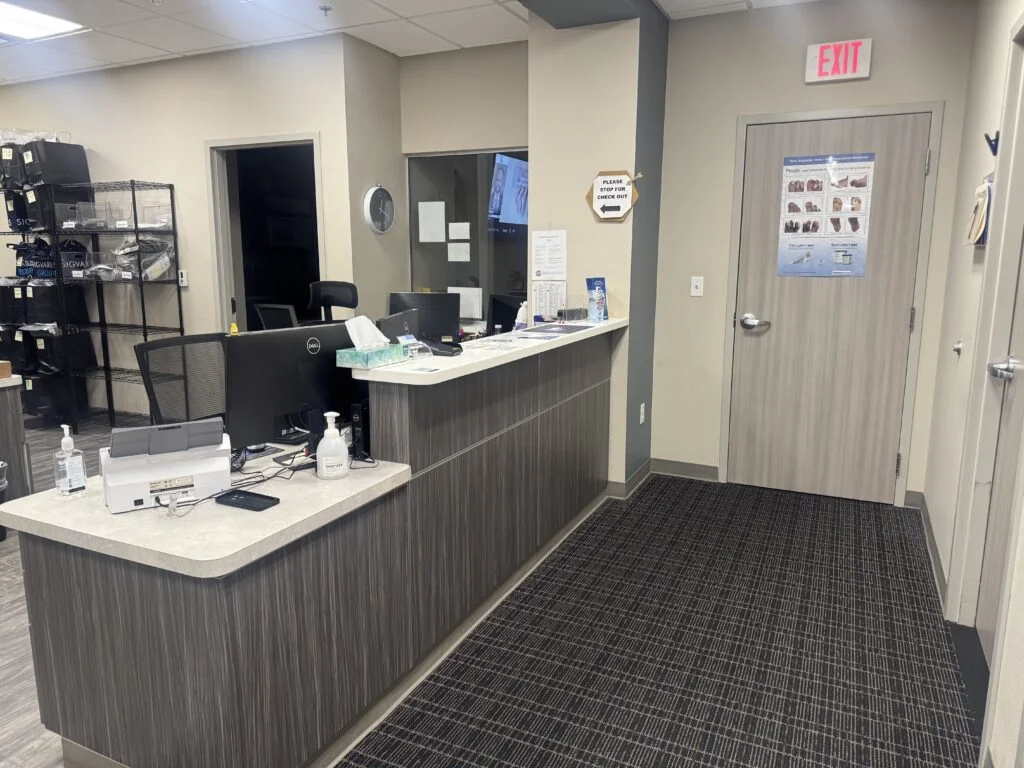


Think you’ve broken a bone? Don’t wait to get it checked.
We’re here to diagnose your injury quickly and help you heal the right way.